
Cork is a 100% natural material obtained from the outer bark of the Quercus Suber (cork oak) tree. These trees typically grow in Mediterranean countries such as Portugal, Spain, Italy, and Algeria. They can live for 150–200 years and produce bark for up to 100 years. Cork oaks do not naturally grow in Turkey, although limited cultivation attempts are being made in Antalya and Izmir.
Cork is harvested by hand every 9–11 years and is classified according to its quality. More than 50% of its cellular structure is filled with air, and thanks to a substance called suberin, it provides water resistance, biological durability, and flexibility.
With its eco-friendly nature, cork supports sustainable living. It is a natural raw material that should be preferred to help protect both our environment and our future.

Oils and Resin Acids

Woody Substances

Soluble Acids
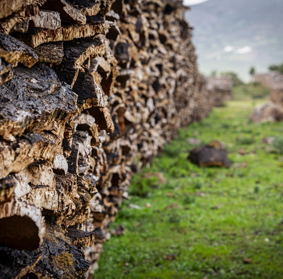
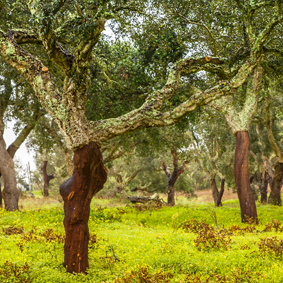
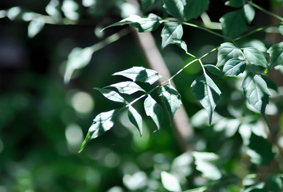
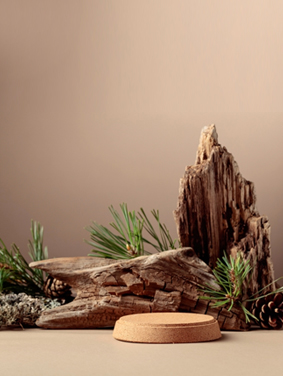
The cork oak (Quercus Suber) grows in the Western Mediterranean region, including Portugal, Algeria, Spain, France, Italy, and parts of South Africa. Portugal is the leading producer of cork, accounting for approximately 80% of global production. Although cork oak does not naturally grow in Turkey, attempts are being made to cultivate it in Antalya. Healthy oak trees are also found in Beykoz, Istanbul. Additionally, cork oak seeds gifted by the King of Spain to Abdulhamid II are being cultivated in Izmir.
Cork oak trees can grow up to 30–35 meters in height. Below 1000 meters altitude, cork begins to form at around 8 years of age, while at higher altitudes this occurs from around 11 years onward. As the tree ages, the thickness of the cork layer decreases. Cork oaks can live up to 150–200 years and produce bark for up to 100 years.
Cork is obtained from the outer bark of the cork oak (Quercus Suber). Depending on the region, it is carefully stripped by hand or axe every 9–11 years. The first harvest produces very rough cork with low commercial value. The second harvest yields better quality, while the highest quality is obtained from the third harvest and onwards. The amount of cork produced depends on factors such as tree size, age, location, climate, growth rate, and the interval between harvests. For example, cork from trees grown in fertile soil tends to be thick and spongy and is considered lower quality, while cork from trees grown in rocky, poor, and sloped soil is denser and more desirable.
Cork consists of approximately 45% oils and resin acids, 20% soluble acids, 27% woody substances, and 7% tannins, pigments, and mineral salts. Around 50–58% of its total volume is made up of air-filled cell structures. The cell walls are coated with a substance called suberin, which prevents water absorption—this is why cork is widely used for bottle stoppers. The complex chemical structure of suberin also makes cork highly resistant to biological degradation, fungi, and insects.
After harvesting, cork bark is boiled to clean and smooth it, then stabilized for several days before being graded. It is then cut transversely to produce cork stoppers and drilled if necessary. Waste material from production is ground into granules and used as raw material in various industrial and construction applications such as rubber production, wall and floor coverings, gaskets, decorative items, seals, and joints.
Low-quality bark from pruned branches is processed into insulation boards. The bonding of these particles (agglomeration) is achieved through steam heating, which softens cork resins and allows granules to expand and bind together.
These cork clusters are later cut into sheets and used in thermal insulation, acoustic insulation, vibration control, food, chemical and medical storage, cold storage facilities, HVAC systems, humidity control, temperature preservation, footwear production, promotional products, and many other industries.
In a world struggling with global warming, using such natural and sustainable materials is essential—not only for our own health and that of future generations, but also to contribute, even in a small way, to preserving our blue planet for the future.